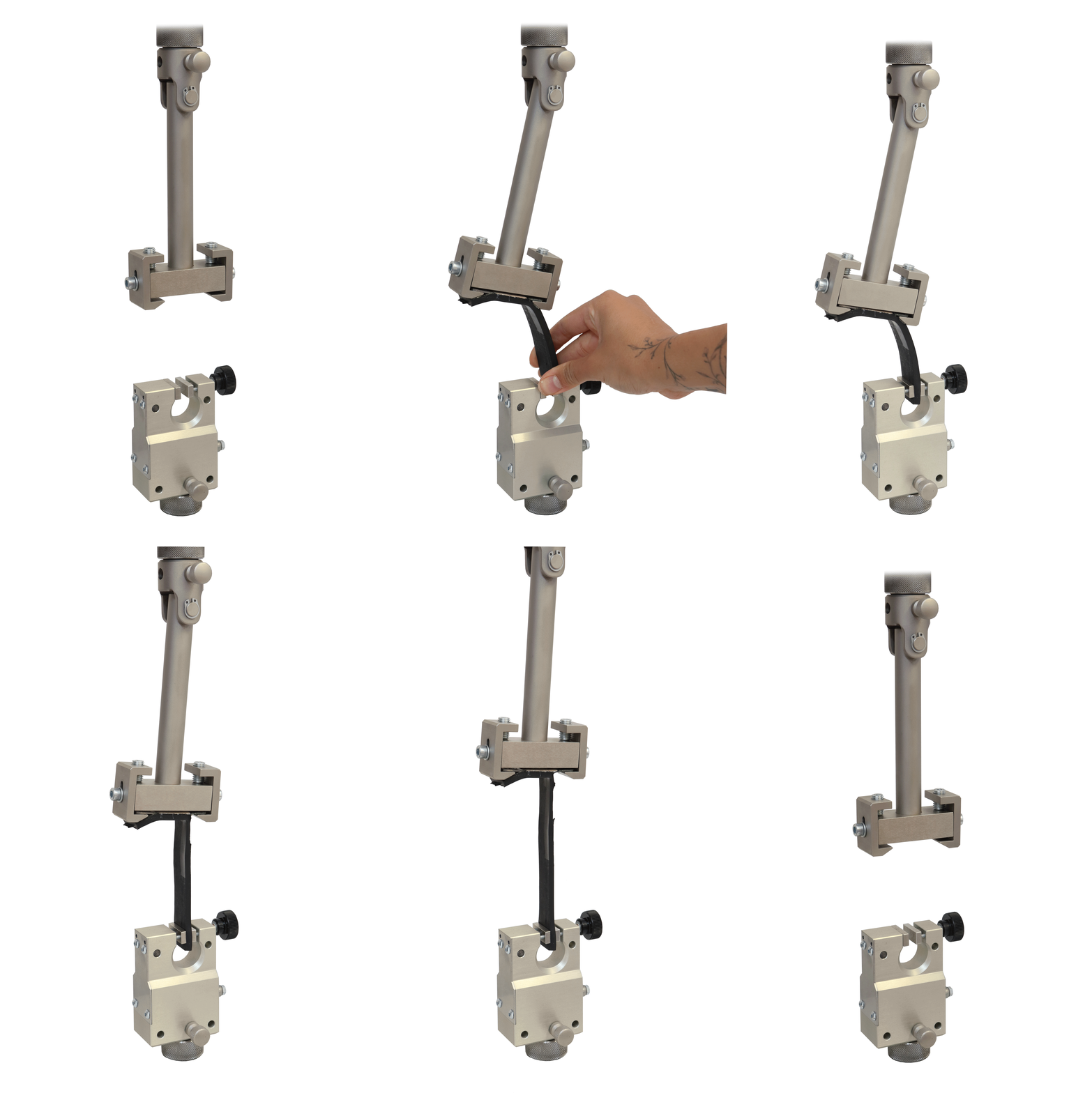
Lap Shear Test ASTM D1002: Adhesive Lap Joint Shear Testing of Metals


ASTM D1002 is used to determine the shear strength of metal bonding adhesives in single-lap shear joint applications. These adhesives are applied to bond a variety of joints and components. Testing is important to characterize the material strength of different adhesives. Additionally, adhesive environmental durability is important in evaluating the long-term performance and reliability of bonded metal connections under varying conditions.
What Is ASTM D1002?
The ASTM D1002 adhesive lap joint shear test is a standardized test method defined by ASTM for assessing the shear strength and performance of adhesive bonds of metals. The test is performed by securing a metal clip over the adhesive joint, loading the clip with a load, and then measuring the shear force needed to break the bond.
What Is Lap Shear Testing?
Shear testing forces are applied parallel to the upper and lower faces of the test specimen and can be either tension or compression-based. Shear test strength and stiffness results in tension mode may vary widely from compression mode. Shear tests are commonly performed on adhesives, and fasteners including bolts, machine screws, and rivets. Lap shear test samples are economical, practical, and easy to make. They are the most popular sample type for development, evaluation, manufacturing quality control, and comparative studies used for adhesives and bonded products. Lap shear tests are also crucial in bonding metals, as specified by ASTM D1002, which determines the shear strength of adhesives through lap shear tests.
Why Perform Tests According to ASTM D1002?
ASTM D1002 is a lap shear test that is performed to determine the shear strength of an adhesive that is applied to two metal plates and pulled to failure. It can be used to compare between adhesive types or different lots within the same adhesive. ASTM D1002 is comparative in nature, and not correlated to real-world performance. Different environmental conditions and joint geometries contribute to the variation of adhesive performance. Understanding environmental durability is important, as factors like temperature and moisture can significantly affect the adhesive's performance and mechanical properties.
Important Considerations when Testing According to ASTM D1002
The misuse of strength values obtained from lap shear joints as design stress allowable values for structural joints could lead to product failure, property damage, and injuries.
ASTM D1002 Test Specimens
A metal substrate is used for ASTM D1002. Specimen size, including dimensions such as width, overlap, and thickness, is important in ensuring the reliability of test results and preventing failure in the substrate rather than the adhesive. The specific types of metals acceptable for testing include brass, copper, aluminum, titanium, steel, and corrosion-resisting steel. A single lap shear geometry consists of two identical substrates with a defined overlap section where adherend is applied.
Test Procedure
The test procedure for lap shear testing involves several critical steps to ensure accurate and reliable results:
-
Specimen Preparation: Begin by preparing two metal plates according to the relevant ASTM standard. These plates are then bonded together using the adhesive under test, ensuring a consistent and uniform bond.
-
Specimen Gripping: Secure the bonded sample in the clutches of a universal testing machine (UTM). Proper alignment is crucial to prevent abnormal loading and ensure that the applied force is evenly distributed across the bond.
-
Load Application: Apply a controlled force to the test specimen at a specified rate until failure occurs. This step is essential to determine the adhesive’s shear strength under standardized conditions.
-
Failure Analysis: Once the test is complete, analyze the mode of failure. Record whether the failure is adhesive (failure at the bond line), cohesive (failure within the adhesive itself), or a combination of both. This information is vital for understanding the adhesive’s performance characteristics.
ASTM D1002 Test Report
The test report includes failure load, expressed as unit shear area, as well as the failure mode. If the failure occurs within the adhesive, then it is reported as cohesion failure of the adhesive. If the failure occurs at the bond between the adhesive and the substrate, then the adhesion to the substrate failed. If the failure occurs within both the adhesive and adhesive-substrate bond then it was a combination failure.
Data Analysis and Reporting
After completing the lap shear test, the collected data is meticulously analyzed to determine the adhesive’s shear strength. Shear strength is calculated by dividing the maximum load recorded during the test by the bonded area. The resulting values are expressed in megapascals (MPa) or pounds per square inch (psi).
The test report is comprehensive, including the failure load expressed as unit shear area and the mode of failure. This detailed reporting helps in understanding the adhesive’s performance and suitability for specific applications. Accurate data analysis is crucial for making informed decisions about adhesive selection and usage.
Test Machines for Lap Shear Tests per ASTM D1002
Our universal test machines serve multiple adhesive testing applications and are capable of performing all quasi-static tension/compression tests, such as tensile, peel, adhesion, and flexural testing. The machine force capacity should be chosen by taking into account the highest force needed over the lifetime of the equipment. Machines feature a uniform constant rate of loading (CRL) and of extension (CRE), or constant velocity control mode. Force measurement complies with ASTM E4.
Given that the standard D1002 test is based on 0.5 in adherend overlap x 1 in wide specimen geometry, and assuming the maximum shear stress is 1400 psi, then the tensile load required would be 700 lbf. If purchasing a new machine, then a minimum safety factor of 3:1 would result in a need for a 2000 lb capacity load frame.
The controller needs to be set so that the specimen is controlled at a stress rate of 8.3 to 9.7 MPa (1200 to 1400 psi) of shear area per minute. The tensile force applied to the specimen translates into a shear stress applied to the area of the adhered area 12.7 mm2 (0.5 in2). Alternatively, a test speed of 1.27 mm/min (0.05 in/min) which is the equivalent crosshead displacement can be used.
Get a Complete Test System for Your Test Application
Completing your material test system is easy. Simply start by choosing a test machine, choose your accessories, and select your controller software. We are your one-stop shop for all your application testing needs.
Request a QuoteWhat Grips Are Required for ASTM D1002?
ASTM D1002 is a test performed on rigid specimens bonded via a lap joint, which causes the ends of the specimen to be offset from the load line of the test. Load string alignment is a unique gripping challenge associated with single-lap shear testing. The geometry of the test specimen naturally causes the two clamped ends of the specimen to be offset. Side loading occurs if the grip selection does not account for that offset. G154 and G240G mechanical vise action grips and several models of pneumatic vise action grips have integrated offsets that allow you to manually adjust the jaw faces to the left or right. This functionality is important so that the operator can ensure that the applied force coincides with the center line of the load string.
This setup requires mechanical grips with offset jaw faces to account for this overlap to ensure a true shear force application.
Industry Applications and Standards
Lap shear testing is a critical evaluation method used across various industries, including aerospace, automotive, and construction. It helps in assessing the performance of adhesives and bonded joints under different conditions. The test is particularly relevant for metal-to-metal bonding applications.
In addition to ASTM D1002, other ASTM standards are used for single-lap-joint shear tests involving different materials. For instance, ASTM D3163 is used for plastics joints, and ASTM D5868 is applicable for fiber-reinforced plastics. These standards ensure that the test results are consistent and reliable, providing valuable insights into the adhesive’s suitability for specific applications.
Best Practices for Lap Shear Testing
To achieve accurate and reliable results in lap shear testing, it is essential to follow best practices:
-
Specimen Preparation: Ensure that the metal plates are prepared and bonded together using the adhesive under test, following the relevant ASTM standards.
-
Proper Alignment: Secure the bonded sample in the universal testing machine with precise alignment to prevent abnormal loading and ensure a true shear force application.
-
Controlled Load Application: Apply a controlled force to the test specimen at a specified rate until failure occurs. This step is crucial for determining the adhesive’s shear strength accurately.
-
Accurate Data Analysis: Analyze the collected data meticulously to determine the shear strength of the adhesive. Report the failure load and mode of failure comprehensively.
-
Compliance with Industry Standards: Ensure that the test is performed in compliance with relevant industry standards, such as ASTM D1002. Adhering to these standards guarantees the reliability and consistency of the test results.
By following these best practices, lap shear testing can provide valuable insights into the performance of adhesives and bonded joints. This information enables manufacturers to select the most suitable adhesives for their applications, ensuring the durability and reliability of their products